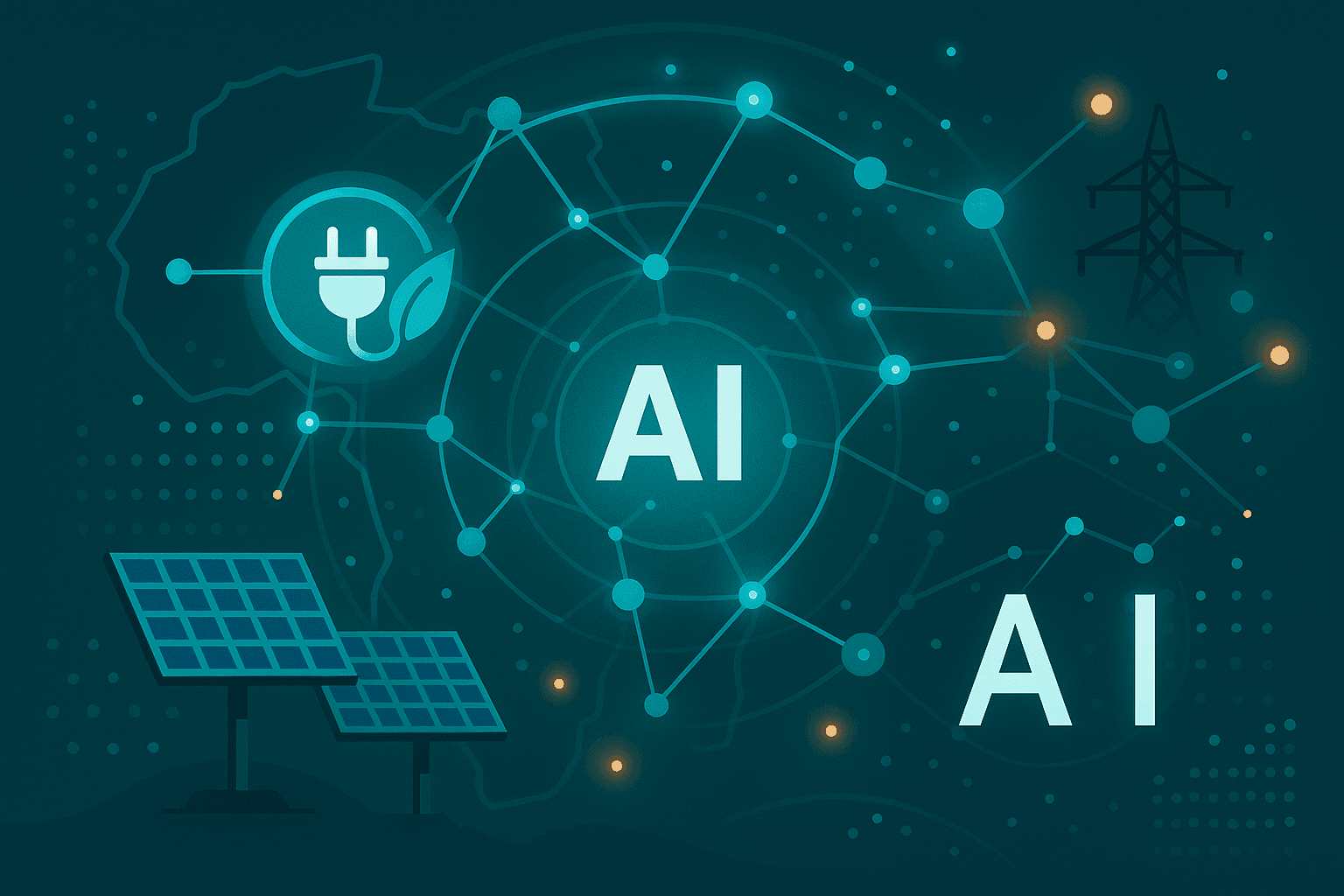
Africa's decentralized energy movement driven by solar, battery storage, and smart grid technology is transforming how electricity is generated, distributed, and managed. From community mini-grids to commercial solar hubs, innovation is breaking free from the limits of traditional centralized grids. But as the continent's clean energy ecosystem expands, the next frontier lies in integration.
The Convergence of Technologies
When solar systems, smart meters, and artificial intelligence converge, they create a living, connected energy network one that learns, adapts, and optimizes itself. AI algorithms can forecast energy demand, balance generation in real time, and predict equipment failures before they occur. Smart meters, in turn, act as the sensory network feeding this intelligence with continuous, field-level data. Together, they transform the grid from a passive infrastructure into an active, intelligent system.
Predictive Analytics and Demand Forecasting
AI algorithms analyze consumption patterns, weather data, and operational metrics to predict energy demand with remarkable accuracy. This enables proactive resource allocation and prevents energy shortages before they occur.
Real-Time Balance Management
The integration allows for real-time balancing between generation and consumption, optimizing battery storage cycles and reducing energy waste significantly.
A Pathway to Sustainability
For rapidly urbanizing nations and rural communities alike, this integration offers a pathway to sustainability without the heavy costs or complexity of centralized grids. It enables better energy planning, reduces wastage, and promotes accessibility even in off-grid regions.
Digital Innovation and Local Capacity
Beyond technical advancement, it also fuels a new wave of digital innovation, investment, and job creation, building local capacity and stimulating green economies across the continent. Communities are training local technicians and creating sustainable employment opportunities in the clean energy sector.
Intelligent Energy Management
Ultimately, the future of Africa's energy landscape will be defined not just by how much power is generated, but by how intelligently it's managed. The success of the decentralized revolution depends on how seamlessly we connect the dots between technology, data, and people creating an ecosystem where energy flows as efficiently as information.
Africa is not just catching up with the world's energy transformation it's redefining it, wiring the future through innovation, intelligence, and inclusion. The continent is poised to become a global leader in decentralized, intelligent energy systems that serve communities while protecting the environment.